
What every amputee should know about bacteria, odor, and healthy skin
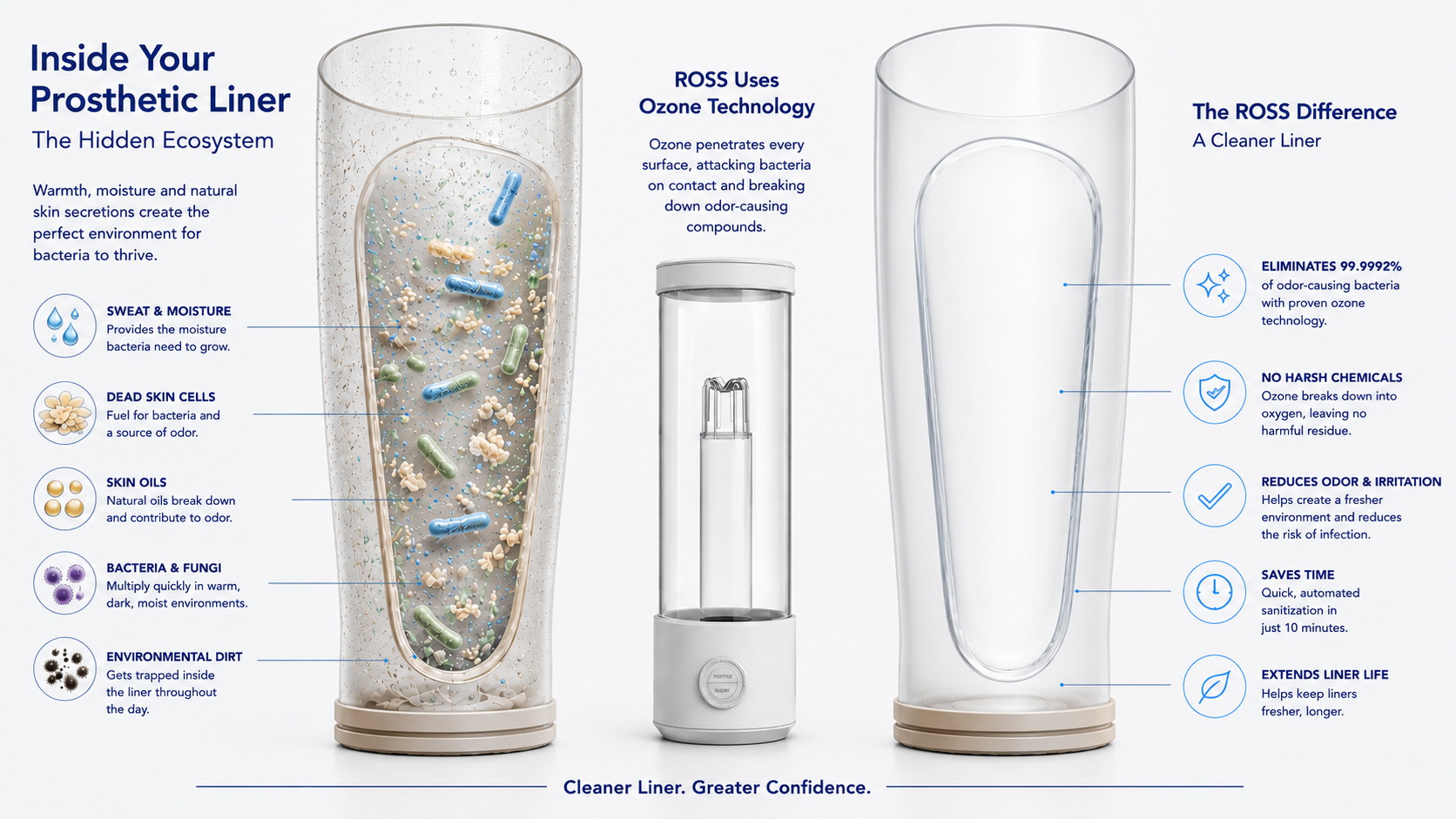
If you wear a prosthetic liner every day, you already know it works hard for you. It provides comfort, cushioning, suspension, and confidence. But what many amputees do not realize is that every liner also becomes home to a microscopic ecosystem that changes throughout the day.
It may sound unpleasant, but understanding what happens inside your liner is one of the best ways to protect your skin, improve comfort, and extend the life of your prosthetic equipment.
Why prosthetic liners create the perfect environment for bacteria
Your prosthetic liner is unlike almost any other piece of clothing.
It sits tightly against your skin for hours at a time. It traps warmth, moisture, and natural skin oils while limiting airflow. These conditions create an ideal environment for bacteria to grow.
That does not mean your liner is dirty or that you are doing anything wrong. It simply means that bacteria have everything they need to multiply.
Throughout the day your liner collects:
- Sweat
- Dead skin cells
- Natural skin oils
- Environmental dirt
- Moisture
Together these create a small ecosystem where bacteria can thrive.
Sweat is not what causes odor
One of the biggest misconceptions is that sweat smells bad.
In reality, fresh sweat has very little odor.
The smell develops when bacteria begin breaking down proteins and oils on your skin. During this process they produce compounds that create the unpleasant odor many amputees experience after wearing a liner all day.
This is why simply allowing your liner to dry may reduce moisture but does not necessarily remove the bacteria responsible for the smell.
Healthy skin starts with good hygiene
For many amputees, skin health is one of the biggest daily challenges.
Healthy skin is essential for wearing a prosthesis comfortably and maintaining an active lifestyle.
Excess bacteria can contribute to:
- Unpleasant odors
- Skin irritation
- Redness
- Discomfort
- Increased risk of infection when skin becomes damaged
Good hygiene is about much more than cleanliness. It is about protecting the skin that allows you to wear your prosthesis every day.
Washing is important but it has limitations
Cleaning your prosthetic liner with soap and water is an excellent daily habit and remains an important part of liner care.
However, washing primarily removes dirt, sweat, and surface contamination. Depending on the cleaning method, it may not significantly reduce the overall bacterial population that has accumulated throughout the day.
That is why many amputees continue to notice odors even after regular cleaning.
Let Desiree show you
Watch this short video where Desiree Johnson talk about her amputee husband and his ROSS: https://www.youtube.com/shorts/EX6A2vDDKg0
You can also explore more on your internal product and clinical pages to understand the full impact of ROSS.
Why ROSS uses ozone technology
ROSS was designed specifically to help address this challenge.
Using carefully controlled ozone technology, ROSS rapidly reduces bacteria inside prosthetic liners without leaving behind harsh chemical residues.
Independent laboratory testing has demonstrated an average 99.9992 percent bacterial reduction across four clinically relevant bacterial species.
The result is a cleaner liner that is ready for the next day while helping support better hygiene and skin health.
A healthier routine starts with small habits
Taking care of your liner does not need to be complicated.
Simple daily habits can make a meaningful difference.
- Clean your liner according to your prosthetist’s recommendations.
- Allow your liner to dry completely.
- Inspect your skin every day.
- Replace worn liners when needed.
- Consider adding sanitization to your daily routine.
Your prosthetic liner works hard for you every day.
Taking care of it helps it take better care of you.
Final thoughts
Living with limb loss already comes with enough challenges. Worrying about odors, bacteria, or skin irritation should not be one of them.
Understanding the hidden ecosystem inside your prosthetic liner is the first step toward healthier skin, greater confidence, and a more comfortable prosthetic experience.
At ROSS, our mission is simple.
To help amputees spend less time worrying about hygiene and more time living life.