
Let’s be honest, prosthetic liner odor is real
If you wear a prosthetic liner, you already know the truth. Even with daily washing, liners can develop a strong odor over time. Odor is a signal from your body and not just an embarrassing discomfort issue. It’s telling you there’s bacterial growth happening inside your liner.
The good news is that understanding the science behind liner odor makes it far easier to eliminate it for good.
Why prosthetic liners smell
Prosthetic liners create an ideal environment for bacteria to thrive. They’re worn against warm skin, collect sweat and oils, and have very little airflow. Those are the exact conditions that allow bacteria to multiply rapidly. Each time a prosthesis is worn, natural bacteria from the skin transfer into the liner. Once inside, they feed on sweat and skin oils, quickly turning the liner into a breeding ground for germs. Without proper hygiene, this invisible buildup can lead to odor, skin irritation, and even infection.
The real source of liner odor is bacteria hiding in tiny tears in your liner.
Most people think smell equals sweat.
Not quite.
Sweat doesn’t smell.
What smells is what bacteria produce when they break down sweat and oils.
Here’s the cycle in simple terms:
- Sweat + body oils collect inside the liner
- Bacteria feed on that moisture
- The Bacteria multiplies
- Bacteria release volatile organic compounds (VOCs)
- You smell it
Odor = bacterial waste products
And once they build up, they cling to the liner material and become hard to remove with soap alone.
Why soap and wipes aren’t enough
Soap and wipes help with daily cleaning, but they aren’t enough to eliminate deep-seated odor in prosthetic liners. That’s because these products often can’t reach into the porous materials of the liner, don’t kill all bacteria, and may leave behind a residue. Many amputees try antibacterial sprays or deodorizing wipes, but those can irritate the skin and degrade liner materials over time. Even if things seem clean for a short while, the smell always returns, because the bacteria are still there. Odor lingers when the source of the problem isn’t fully removed.
The science-backed way to eliminate liner odor
To truly stop odor, you must eliminate the bacteria, not just cover the smell.
That’s where ozone sanitization comes in.
Ozone (O₃) is a powerful, natural disinfectant widely used in hospitals to sanitize medical equipment. It works by breaking down bacteria at the molecular level without using harsh chemicals, liquids, or leaving any residue. When applied correctly, ozone penetrates deep into porous liner materials, destroys bacteria by breaking their cell walls, neutralizes odor molecules, and works automatically while you rest.
Meet ROSS: The first automated liner sanitizing system
ROSS (Rapid Ozone Sleeve Sanitizer) brings professional-grade ozone hygiene to amputees at home.
– Clinically tested
– 5.1 log bacterial reduction (99.9992%)
– Eliminates odor at the source
– Zero chemicals or consumables
– Gentle on liner materials
– Quiet, overnight cycle
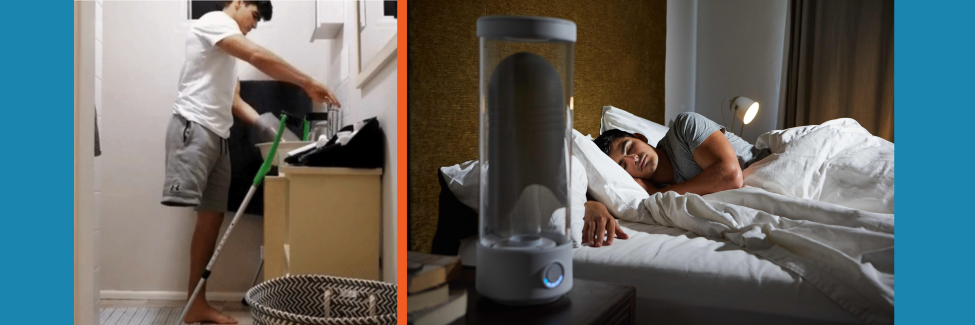
Instead of scrubbing, soaking, or hoping, you simply place your liner inside, close the lid, and let ROSS handle the science.
Wake up to a fresh, odor-free liner and healthy skin confidence every day.
Daily hygiene checklist for odor-free liners
Pair this routine with ROSS for best results:
To maintain healthy skin and keep your prosthetic liner fresh, follow a few simple daily habits: Wash your skin and residual limb thoroughly, clean your liner with a mild, unscented soap, and make sure everything is completely dry before use. Avoid applying heavy lotions inside the liner, as these can interfere with hygiene. Most importantly, use ROSS every night for deep, automatic sanitization. These small steps go a long way in preventing odor and promoting skin health.
Remember that if your liner smells, it’s not your fault, it’s biology.
Odor is a sign of bacterial buildup, and wiping or washing alone often can’t fix it long-term.
Kill the bacteria → stop the smell → protect your skin.
That’s the ROSS philosophy. To learn more visit our YouTube page.